Spermidine: the 1920s Polyamine Research Boom
06/01/2026 11:07:20
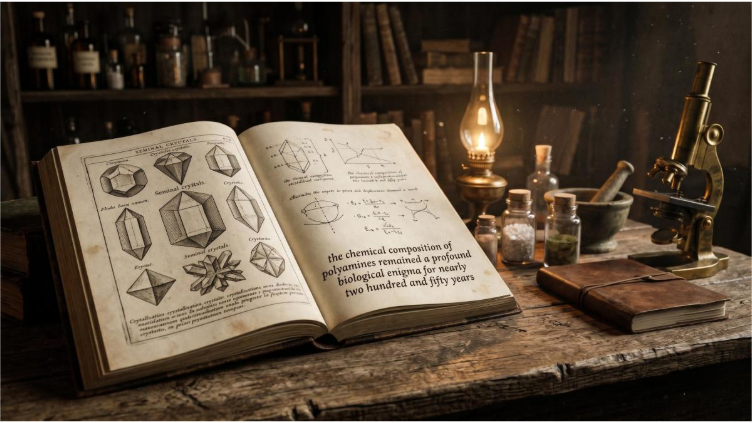
While the seventeenth century provided us with the visual wonder of seminal crystals, the chemical composition of polyamines remained a profound biological enigma for nearly two hundred and fifty years. It was not until the post-World War I chemical boom of the 1920s that scientists entered a golden decade of analytical clarity. Led by pioneering biochemists Harold Ward Dudley, Otto Rosenheim, and Ernest Starling, the chemical structures of spermine and its vital precursor—spermidine—were finally elucidated. This decade transformed polyamines from puzzling crystalline sediments into deeply characterized active components of physiological biology. For global raw material suppliers, understanding this golden age reveals the precise chemical standards that modern QA regulations are built upon. Today, sourcing a reliable Spermidine bulk powder supplier means appreciating how far we have come from those painstaking lab-scale isolations.
Dudley, Rosenheim and Starling Form the Triumvirate of Spermidine Polyamine Identification
The breakthrough was centered at the National Institute for Medical Research (NIMR) in London. In 1924, Otto Rosenheim discovered that spermine, initially thought to be a simple organic compound, was in fact an aliphatic nitrogenous base containing multiple amino groups. Rosenheim, collaborating closely with the masterful chemist Harold Ward Dudley and the celebrated cardiac physiologist Ernest Starling, designed a series of chemical degradations and syntheses. By 1926, this research collective successfully solved the structural puzzle, proving that spermine was N,N'-bis(3-aminopropyl)butane-1,4-diamine. Immediately following this success, they isolated and characterized the closely related compound, which they named 'spermidine', identifying it structurally as N-(3-aminopropyl)butane-1,4-diamine. Their work also laid the foundation for understanding Spermidine water solubility, a critical property that influences how modern formulations are designed for maximum bioavailability.
The Evolution of Yield and Synthesis Scales
Reviewing the experimental limitations of the 1920s highlights the staggering evolution of industrial-scale organic synthesis and biochemistry. Dudley and Rosenheim's initial extractions of raw spermine from animal tissues were notoriously inefficient, requiring immense raw materials for minuscule laboratory samples. Buyers must analyze these historical and modern benchmarks to appreciate today's manufacturing capability. For instance, while early researchers had no access to a Fermented spermidine source, today’s biotechnology allows us to produce spermidine via clean, scalable microbial fermentation—bypassing animal-derived tissues entirely.
Quantifying the Chemical and Extraction Efficiency
1926 Extraction Yield: Otto Rosenheim's primary tissue isolation process yielded roughly 0.12 grams of spermine residue from 1.0 kilogram of fresh animal pancreas tissues (a meager 0.012% extraction efficiency rate).
1926 Chemical Synthesis: The initial laboratory synthesis by Dudley required a complex 8-step reaction utilizing toxic alkyl halides, yielding an overall chemical conversion rate of just 4.5%.
Modern Biotech Sourcing (2026): Pure biosynthetic routes utilize engineered microbial fermentation, registering yields of over 45.0 grams per liter (over 370-fold increase in reaction density). This advancement enables Wholesale wheat germ extract spermidine to be produced alongside fermentation-derived options, offering manufacturers flexible sourcing choices.
Bulk Purity and Control: Modern manufacturing outputs reach a refined purity threshold of 99.2% for Spermidine Trihydrochloride block quantities, with heavy metal contamination reduced to less than 1.5 parts per million. Today, a High concentration spermidine extract is no longer a laboratory curiosity but a routine industrial product, thanks to optimized downstream processing.
This monumental efficiency transformation is the reason why spermine and spermidine have transitioned from rare museum powders costing astronomical laboratory custom budgets to scalable bulk ingredients distributed across the global nutraceutical and cosmetics industries. And when you partner with a trusted Spermidine bulk powder supplier, you gain access to rigorous HPLC certificates and heavy metal reports—documents that trace their lineage directly back to the analytical standards set by Dudley and Rosenheim.
Leveraging Scientific Ancestry to Cultivate Sourcing Credibility
For marketing professionals looking to optimize their independent trade sites, incorporating the scientific history of Dudley, Rosenheim, and Starling is not merely an academic exercise. It serves as an elite positioning strategy that sets a raw material manufacturer apart from low-tier trading brokers. When bulk supplement brands search for a spermidine supplier, they look for partners who demonstrate complete chemical and regulatory mastery over the materials they sell.
By detailing how Dudley and Rosenheim defined the precise structure of spermidine, supplier can logically transition to a showcase of their modern high-performance liquid chromatography (HPLC) certificates and heavy metal lab sheets. In a hyper-competitive global landscape, trade buyers look for partners who understand the chemical evolution of their products. This deep narrative authority builds immediate commercial trust, transforming simple SEO outbound articles into powerful sales accelerators that drive continuous inquiry leads from premium health supplement brands across Europe and North America.
LeadingNutra Supplying The Purest Spermidine Powder
LeadingNutra Spermidine manufacturer, bridging 1920s scientific heritage with tomorrow’s fermentation technology. Contact us today for bulk inquiries and technical support.
[1] The Biochemical Journal (Portland Press).
[2] National Center for Biotechnology Information (NCBI) PMC.
[3] PubChem Compound Reference Directory.
[4] Nature Reviews Molecular Cell Biology – Polyamine History.
[5] ScienceDirect – Spermidine Biotechnology Review.